Bold, sticky, spicy-sweet meatballs piled into crisp lettuce cups and drizzled with a creamy peanut-ginger sauce — this is the kind of meal that makes a weeknight feel like something worth celebrating. I first made these on a whim after craving the flavors of Korean fried chicken but wanting something lighter and faster, and I have been hooked ever since. The combination of gochujang-glazed chicken meatballs with that nutty, tangy sauce is genuinely one of the best flavor pairings I have ever put together in my kitchen.
What I love most about this recipe is how much it delivers with relatively little effort. The meatballs come together in under 20 minutes, the sauce is a quick whisk-and-done situation, and the whole thing lands on the table in under an hour. Whether you are cooking for a crowd or just treating yourself on a Tuesday, these wraps bring serious restaurant energy to your home kitchen. I am thrilled to share every detail so yours turn out just as gorgeous as the ones in that photo.
Why You Will Love This Spicy Korean Chicken Meatball Lettuce Wraps with Peanut-Ginger Sauce
What Exactly Makes Gochujang the Secret Weapon in These Meatballs?
Gochujang is a fermented Korean chili paste made from red chili peppers, glutinous rice, fermented soybeans, and salt. It has a deeply complex flavor that is simultaneously spicy, sweet, savory, and slightly smoky. When you use it in a glaze, it caramelizes beautifully under heat, creating that gorgeous lacquered coating you can see on the meatballs in the photo above. It is not a one-dimensional hot sauce — it has a richness and depth that builds layers of flavor in a way that no other ingredient quite replicates.
You can find gochujang at most Asian grocery stores and increasingly at mainstream supermarkets in the international foods aisle. It comes in tubs or tubes and keeps in the refrigerator for months, so one purchase goes a long way. I tend to use the medium-heat variety for this recipe, which gives a satisfying kick without being overwhelming. If you are new to cooking with it, this recipe is genuinely one of the best introductions you can give yourself.
Substitutions and Variations
- Ground chicken: You can swap ground chicken for ground turkey or even a blend of ground pork and chicken if you want a slightly richer, juicier meatball with a bit more fat content.
- Gochujang: If you cannot find gochujang, a mix of sriracha and a small spoonful of miso paste makes a reasonable substitute that mimics some of the fermented depth and heat.
- Peanut butter: Use almond butter or sunflower seed butter for a nut-free or peanut-allergy-friendly version of the sauce — both work surprisingly well with the ginger and lime.
- Butter lettuce: Any wide, sturdy leaf works as a cup. Romaine hearts, iceberg lettuce, or even large cabbage leaves are all excellent alternatives that hold up well under the weight of the meatballs.
- Breadcrumbs: Swap regular breadcrumbs for panko for a slightly lighter meatball, or use almond flour to keep the recipe gluten-free without losing the binding you need.
- Fresh ginger: Ground ginger works in a pinch — use about one-third of the amount called for in fresh ginger, as the dried version is more concentrated and potent.
- Rice vinegar: Apple cider vinegar or fresh lime juice are both good substitutes that bring a similar brightness and acidity to the peanut sauce.
Watch Out for These Mistakes While Cooking
Overmixing the meatball mixture. This is the most common reason homemade meatballs turn out dense and rubbery instead of tender and juicy. Mix the chicken with the other ingredients just until everything is combined. Once you stop seeing dry patches, stop mixing. A gentle hand makes all the difference in the final texture.
Adding the glaze too early in the cooking process. Gochujang-based glazes contain sugar that burns quickly at high heat. I find that brushing the glaze on during the last 5 to 7 minutes of baking — rather than at the start — allows the meatballs to cook through properly before the caramelization happens. If you add it too early, you risk a bitter, scorched exterior before the center is fully cooked.
Skipping the parchment or oil on your baking sheet. Chicken meatballs with a sugary glaze are incredibly prone to sticking, and once they bond to the pan, you lose that beautiful caramelized crust when you try to lift them. Always line your baking sheet with parchment paper or give it a generous coating of cooking spray before placing the meatballs down. It is a small step that protects all your hard work.
What to Serve With This Spicy Korean Chicken Meatball Lettuce Wraps with Peanut-Ginger Sauce
The wraps are satisfying on their own, but pairing them with steamed jasmine rice or a simple sesame cucumber salad turns this into a complete and well-rounded meal. I love setting everything out in separate bowls and letting people build their own wraps at the table, which makes it a fantastic option for casual dinner parties or family meals where everyone has different preferences. A little bowl of kimchi on the side adds a welcome tangy, funky contrast that cuts through the richness of the peanut sauce beautifully.
For drinks, something cold and slightly sweet works really well alongside the spice. A chilled Korean barley tea, a ginger beer, or even a simple lemonade all complement the bold flavors without competing with them. If you are serving this as an appetizer rather than a main course, the meatballs can be skewered and served directly without the lettuce, which makes them an easy and impressive party bite alongside a small bowl of the peanut sauce for dipping.
Storage Instructions
Store: Place leftover meatballs in an airtight container and refrigerate for up to 4 days. Store the peanut sauce separately in a small jar or container and keep in the fridge for up to 5 days. The lettuce cups are best prepared fresh and should not be stored once assembled.
Freeze: Freeze the cooked and cooled meatballs (without sauce) in a single layer on a baking sheet until solid, then transfer to a freezer-safe bag or container for up to 3 months. The peanut sauce can also be frozen in small portions, though it may need to be re-whisked after thawing.
Reheat: Reheat meatballs in a 350°F (175°C) oven for 10 to 12 minutes, or in a skillet over medium heat with a splash of water or soy sauce to keep them moist. You can also microwave them in 30-second intervals until warmed through. Gently warm the peanut sauce in a small saucepan over low heat, adding a teaspoon of water at a time if it has thickened up during storage.
| Preparation Time | 15 minutes |
| Cooking Time | 30 minutes |
| Total Time | 45 minutes |
| Difficulty | Easy |
| Servings | 4 servings |
Estimated Nutrition
- Calories: 420
- Protein: 32g
- Fat: 22g
- Carbohydrates: 24g
(Estimated per serving, without optional ingredients)
Ingredients
- For the Meatballs:
- 1 lb (450g) ground chicken
- 1/3 cup panko breadcrumbs
- 1 large egg
- 3 cloves garlic, minced
- 1 teaspoon fresh ginger, grated
- 2 tablespoons gochujang (Korean chili paste)
- 1 tablespoon soy sauce
- 1 tablespoon sesame oil
- 2 green onions, finely sliced
- 2 tablespoons fresh cilantro, chopped
- Salt and black pepper to taste
- For the Gochujang Glaze:
- 3 tablespoons gochujang
- 2 tablespoons soy sauce
- 1 tablespoon honey
- 1 tablespoon rice vinegar
- 1 teaspoon sesame oil
- 1 clove garlic, minced
- For the Peanut-Ginger Sauce:
- 1/3 cup creamy peanut butter
- 2 tablespoons soy sauce
- 1 tablespoon rice vinegar
- 1 tablespoon honey
- 1 teaspoon fresh ginger, grated
- 1 teaspoon sesame oil
- 2 to 3 tablespoons warm water (to thin)
- Juice of 1 lime
- For Serving:
- 1 head butter lettuce, leaves separated
- 1 cup shredded cabbage (green or purple)
- 1/4 cup crushed roasted peanuts
- Fresh cilantro leaves
- 2 to 3 red chilies, thinly sliced
- Lime wedges
Step 1: Preheat the Oven and Prepare Your Baking Sheet
- 1 large rimmed baking sheet
- 1 sheet parchment paper or cooking spray
Preheat your oven to 400°F (200°C) and line a large rimmed baking sheet with parchment paper, or coat it generously with cooking spray. I like to get this done first so the oven is fully up to temperature by the time the meatballs are formed and ready to go in. Having the sheet ready also means you are not scrambling later with meat-covered hands.
Step 2: Mix and Form the Chicken Meatballs
- 1 lb (450g) ground chicken
- 1/3 cup panko breadcrumbs
- 1 large egg
- 3 cloves garlic, minced
- 1 teaspoon fresh ginger, grated
- 2 tablespoons gochujang
- 1 tablespoon soy sauce
- 1 tablespoon sesame oil
- 2 green onions, finely sliced
- 2 tablespoons fresh cilantro, chopped
- Salt and black pepper to taste
In a large bowl, combine the ground chicken, panko, egg, garlic, ginger, gochujang, soy sauce, sesame oil, green onions, and cilantro. Season lightly with salt and pepper, keeping in mind that gochujang and soy sauce both carry salt. Mix everything together with your hands or a fork just until combined — I find that stopping as soon as the mixture looks uniform keeps the meatballs tender rather than tough. Using a cookie scoop or a spoon, portion the mixture into balls about 1.5 inches in diameter and place them on the prepared baking sheet, spacing them about an inch apart.
Step 3: Bake the Meatballs
Slide the baking sheet into the preheated oven and bake the meatballs for 18 to 20 minutes, or until they are cooked through and just beginning to turn golden on the outside. I tend to flip them once halfway through baking to ensure even browning on all sides. An internal temperature of 165°F (74°C) is what you are aiming for. At this point, do not add the glaze yet — they need to be nearly done before the glaze goes on.
Step 4: Make the Gochujang Glaze
- 3 tablespoons gochujang
- 2 tablespoons soy sauce
- 1 tablespoon honey
- 1 tablespoon rice vinegar
- 1 teaspoon sesame oil
- 1 clove garlic, minced
While the meatballs are baking, whisk together all the glaze ingredients in a small bowl until smooth and well combined. I like to taste it at this stage and adjust the balance — a little more honey if you want it sweeter, a splash more vinegar if you want extra tang. The glaze should be thick enough to coat the back of a spoon but still pourable. Set it aside until the meatballs are ready for glazing.
Step 5: Glaze and Broil the Meatballs
Once the meatballs have baked through, remove the pan from the oven and brush or spoon the gochujang glaze generously over each meatball. Return the pan to the oven and switch to the broiler setting on high. Broil for 3 to 5 minutes, watching closely, until the glaze is caramelized, sticky, and deeply lacquered. I find that keeping the oven rack in the center position rather than right under the broiler gives you more control and prevents the sugary glaze from scorching. The meatballs should look glossy and slightly charred at the edges, exactly like what you see in the photo.
Step 6: Whisk Together the Peanut-Ginger Sauce
- 1/3 cup creamy peanut butter
- 2 tablespoons soy sauce
- 1 tablespoon rice vinegar
- 1 tablespoon honey
- 1 teaspoon fresh ginger, grated
- 1 teaspoon sesame oil
- 2 to 3 tablespoons warm water
- Juice of 1 lime
In a bowl or jar, whisk together the peanut butter, soy sauce, rice vinegar, honey, ginger, sesame oil, and lime juice until smooth. Add warm water one tablespoon at a time until the sauce reaches a drizzleable consistency — I like mine about as thick as a creamy salad dressing. Taste and adjust the lime or honey to your preference. This sauce can be made ahead and refrigerated, and it actually gets better as the flavors meld together over time.
Step 7: Assemble the Lettuce Wraps and Serve
- 1 head butter lettuce, leaves separated
- 1 cup shredded cabbage
- 1/4 cup crushed roasted peanuts
- Fresh cilantro leaves
- 2 to 3 red chilies, thinly sliced
- Lime wedges
Arrange the butter lettuce cups on a large platter or shallow bowl. Add a small handful of shredded cabbage to the base of each cup, then nestle two or three glazed meatballs on top. Drizzle the peanut-ginger sauce generously over everything, then finish with crushed peanuts, fresh cilantro, and sliced red chilies. I love serving extra sauce and lime wedges on the side so everyone can customize their own wraps. Bring the whole spread to the table and let people dig in family-style — it is the most fun way to enjoy this dish.
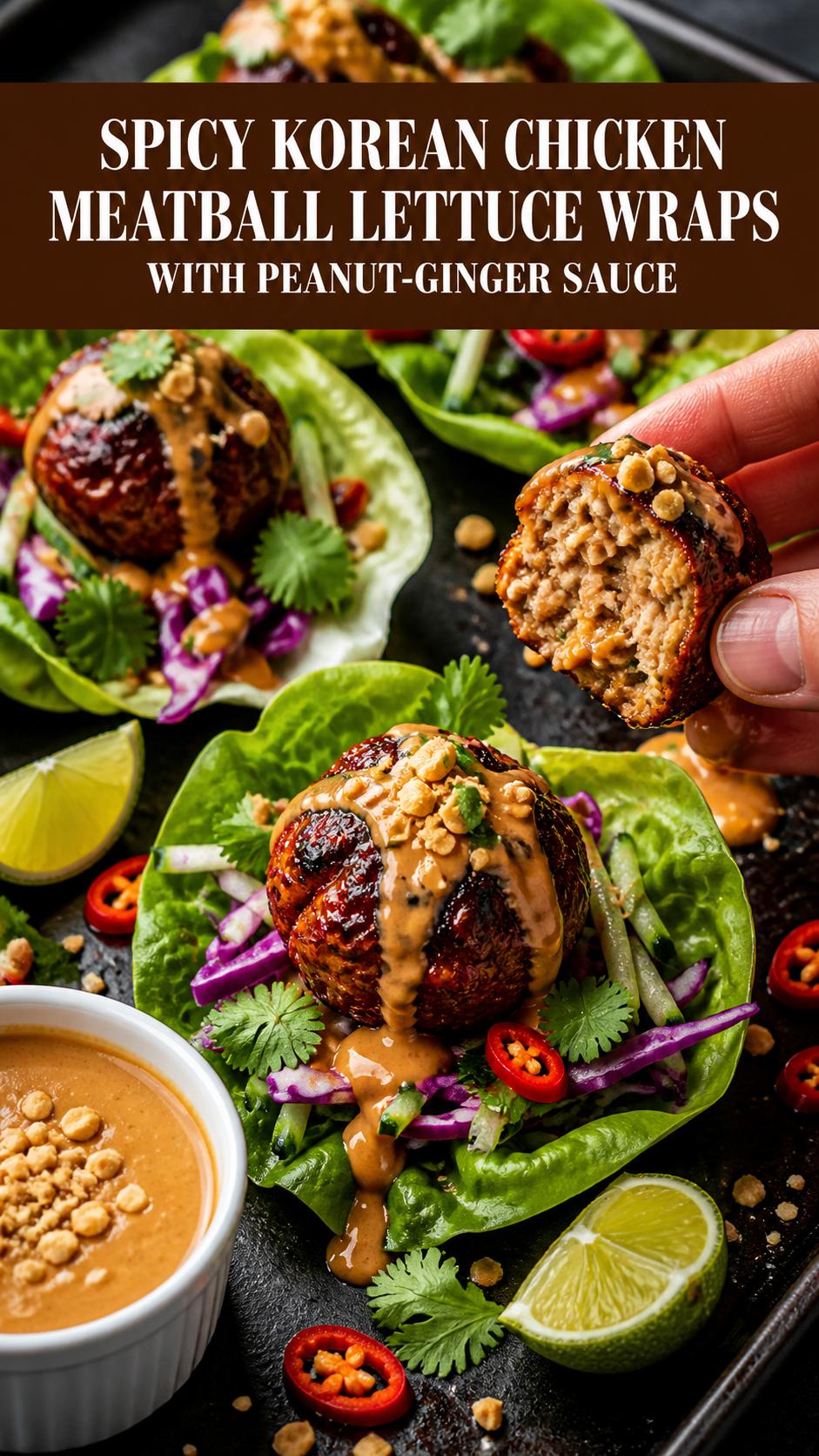
Spicy Korean Chicken Meatball Lettuce Wraps with Peanut-Ginger Sauce
Ingredients
For the Meatballs
- 1 lb 450g ground chicken
- 1/3 cup panko breadcrumbs
- 1 large egg
- 3 cloves garlic minced
- 1 teaspoon fresh ginger grated
- 2 tablespoons gochujang Korean chili paste
- 1 tablespoon soy sauce
- 1 tablespoon sesame oil
- 2 green onions finely sliced
- 2 tablespoons fresh cilantro chopped
- Salt and black pepper to taste
For the Gochujang Glaze
- 3 tablespoons gochujang
- 2 tablespoons soy sauce
- 1 tablespoon honey
- 1 tablespoon rice vinegar
- 1 teaspoon sesame oil
- 1 clove garlic minced
For the Peanut-Ginger Sauce
- 1/3 cup creamy peanut butter
- 2 tablespoons soy sauce
- 1 tablespoon rice vinegar
- 1 tablespoon honey
- 1 teaspoon fresh ginger grated
- 1 teaspoon sesame oil
- 2 to 3 tablespoons warm water to thin
- Juice of 1 lime
For Serving
- 1 head butter lettuce leaves separated
- 1 cup shredded cabbage green or purple
- 1/4 cup crushed roasted peanuts
- Fresh cilantro leaves
- 2 to 3 red chilies thinly sliced
- Lime wedges
Instructions
Instructions
- Preheat your oven to 400°F (200°C) and line a large rimmed baking sheet with parchment paper or coat it generously with cooking spray. Get this done first so the oven is fully up to temperature by the time the meatballs are formed and ready to go in.
- In a large bowl, combine the ground chicken, panko, egg, garlic, ginger, gochujang, soy sauce, sesame oil, green onions, and cilantro. Season lightly with salt and pepper. Mix just until combined — do not overmix. Using a cookie scoop or spoon, portion the mixture into balls about 1.5 inches in diameter and place them on the prepared baking sheet, spacing them about an inch apart.
- Slide the baking sheet into the preheated oven and bake the meatballs for 18 to 20 minutes, flipping once halfway through, until cooked through and golden on the outside. The internal temperature should reach 165°F (74°C). Do not add the glaze yet at this stage.
- While the meatballs bake, whisk together the gochujang, soy sauce, honey, rice vinegar, sesame oil, and minced garlic in a small bowl until smooth. Taste and adjust the balance as desired. The glaze should be thick enough to coat the back of a spoon but still pourable. Set aside.
- Once the meatballs have baked through, remove the pan from the oven and brush or spoon the gochujang glaze generously over each meatball. Return the pan to the oven and switch to the broiler on high. Broil for 3 to 5 minutes, watching closely, until the glaze is caramelized, sticky, and deeply lacquered. Keep the oven rack in the center position for better control.
- In a bowl or jar, whisk together the peanut butter, soy sauce, rice vinegar, honey, ginger, sesame oil, and lime juice until smooth. Add warm water one tablespoon at a time until the sauce reaches a drizzleable consistency similar to a creamy salad dressing. Taste and adjust lime or honey to preference.
- Arrange butter lettuce cups on a large platter or shallow bowl. Add a small handful of shredded cabbage to the base of each cup, then nestle two or three glazed meatballs on top. Drizzle the peanut-ginger sauce generously over everything, then finish with crushed peanuts, fresh cilantro, and sliced red chilies. Serve extra sauce and lime wedges on the side for customizing.